


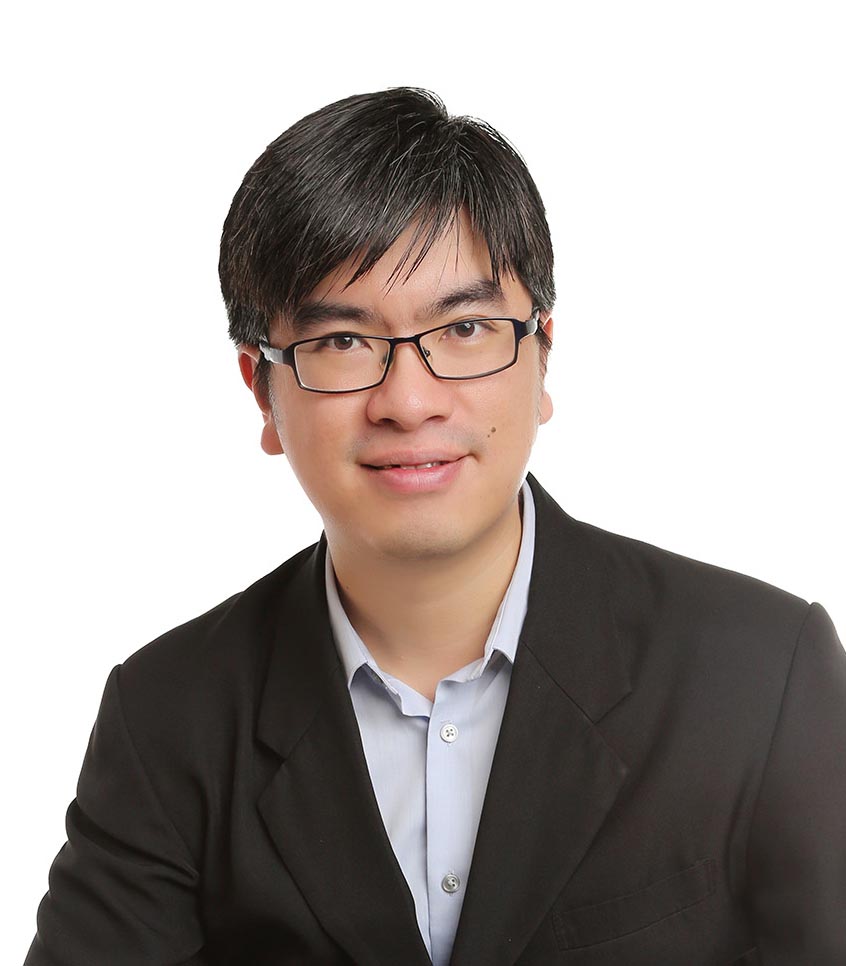
(Chris) Lok To SHAM
Faculty & Department
Education
Doctor of Philosophy, Indiana University, Bloomington, United States
Bachelor of Science Hons Class 2A, Chinese University of Hong Kong, Hong Kong SAR
Bio
Dr. (Chris) Lok-To Sham is an Assistant Professor in the Department of Microbiology and Immunology at the National University of Singapore. He uncovered a widely conserved ATP-binding cassette transporter, FtsEX, that controls peptidoglycan hydrolysis during cytokinesis. During his postdoctoral training, he demonstrated that MurJ is the long-sought transporter of peptidoglycan. Chris started his research group in 2017. His research program aims to elucidate how CPS is produced and how its synthesis is coordinated with assembling other cell envelope layers. Using a multi-disciplinary approach, his research group addressed fundamental questions regarding CPS synthesis and regulation, investigated the role of surface glycan in host-pathogen interactions, and developed innovative techniques to engineer glycans genetically. Chris is the recipient of the National Research Foundation Fellowship, Class of 2019. He is the Vice President of the Singapore Society of Microbiology and Biotechnology and the Research Director of the Infectious Diseases Translational Research Programme at Yong Loo Lin School of Medicine, National University of Singapore.
Contact Information


Our laboratory tackles the urgent challenge of antibiotic resistance by revealing how Streptococcus pneumoniae assembles its cell envelope, a critical structure for its survival and pathogenicity. Pneumococcus is a leading cause of pneumonia, claiming the largest number of years of life lost (YLLs) worldwide. The lab aims to accelerate the development of new vaccines and therapies to outpace resistance and reduce the global burden of pneumococcal diseases.
We study glycan synthesis in bacteria, combining genetics, systems biology, biochemistry, and cell biology approaches to explore three central themes: the roles of surface glycans in attachment and immune evasion, the biology of enzymes responsible for capsule synthesis, and the coordination required for assembling the cell envelope. Our discoveries contribute to a deeper understanding of pneumococcal biology and lay the foundation for novel approaches in glycoengineering and systems biology.
My Mentoring Style
How would you describe your mentoring style in terms of freedom given to your students?


Selecting Research Topics?
How do you guide your PhD students in selecting research topics?
Setbacks / Challenges
How do you handle setbacks or challenges faced by your PhD students?
Consultation Frequency
How often do you typically meet your PhD students one-on-one for consultation?