


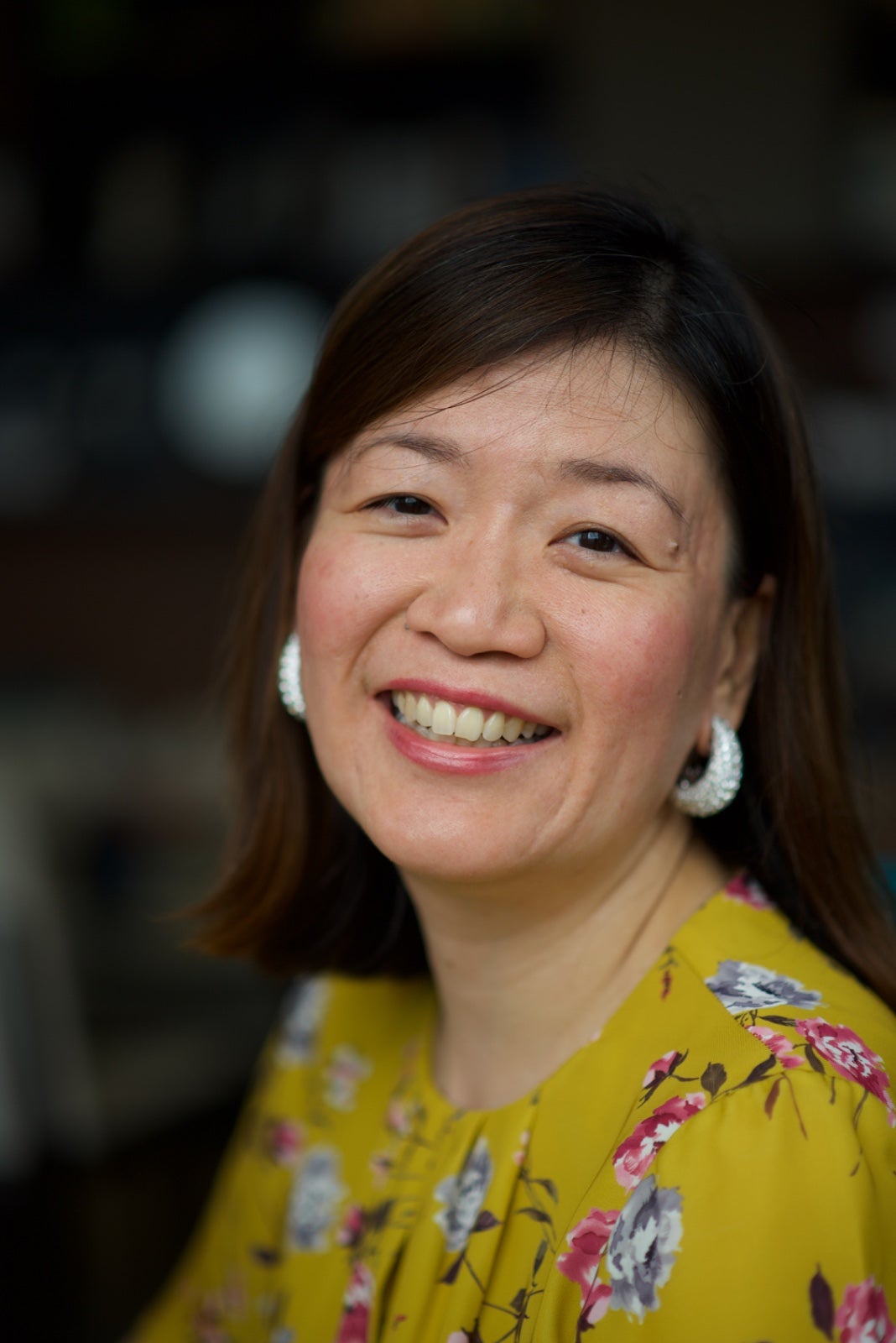
Catherine WM Ong
Faculty & Department
Joint Appointments
Assistant Dean, Medicine, Medicine
Associate Professor, Institute for Health Innovation and Technology
Assistant Dean (Research), Dean's Office (Medicine), Yong Loo Lin School of Medicine
Senior Consultant, National University Hospital
Visiting Senior Consultant, Tuberculosis Care Centre, Tan Tock Seng Hospital
Education
Fellow, Royal College of Physicians, Royal College of Physicians, United Kingdom
Bachelor of Medicine, Bachelor of Surgery, National University of Singapore, Singapore
Fellow Academy of Medicine of Singapore, Academy of Medicine, Singapore
Diplomate of the Imperial College, Imperial College London, United Kingdom
Member, Royal Coll of Physicians, Royal College of Physicians, UK, United Kingdom
Master of Medicine (Internal Medicine), National University of Singapore, Singapore
Bio
Dr Catherine W.M. ONG MBBS MRCP(UK) MMed (Int Med) PhD FAMS FRCP is Associate Professor with Tenure at Department of Medicine, Assistant Dean of Research in NUS Medicine, Head of NUHS Clinician-Scientist Academy, Principal Investigator in iHealthtech, Senior Consultant with Division of Infectious Diseases in NUH and Visiting Consultant at Tuberculosis Control Unit Singapore with research and clinical interests in Tuberculosis. She serves in international journal editorial boards; as Associate Editor of the leading European Respiratory Journal and Deputy Editor of the flagship International Journal of Tuberculosis and Lung Disease. Her other portfolios include Elected Executive Council and Treasurer to the ESCMID Study Group for Mycobacterial Infections (ESGMYC). She previously served as Vice-President of Society of Infectious Disease (Singapore) 2018 – 2023, Honorary Secretary to the Chapter of Infectious Disease Academy of Medicine Singapore 2017 – 2023 and elected Council Member and then Treasurer of College of Clinician Scientists Singapore 2020-2023. She is expert reviewer to global funding agencies such as the Wellcome Trust, UK RI and ESCMID and is internationally-recognised.
Catherine graduated in medicine from NUS in 2003 and completed a full-time PhD in 2013 at Imperial College London funded by the National Medical Research Council (NMRC) on the competitive National Research Foundation – Ministry of Health Scholarship. Her laboratory focuses on Tuberculosis host-pathogen interactions, biomarker discovery and TB host-directed therapies in multi-national clinical trials. Work is funded by the NMRC, National Centre for Infectious Diseases and NUS with grant income as Lead-PI of over SGD $12 million. Her research team of outstanding graduate students and research staff have won multiple national and international-level awards notably from ECCMID, APCCMI and the Wellcome Trust.
On clinical aspects of TB, Catherine serves the Ministry of Health Singapore and works with WHO Coordinating Centres and WHO itself. For her work, she received multiple national and international accolades. They include a Presidential Award at the American Society for Leukocyte Biology 2011, Global Health Travel Award by Bill and Melinda Gates Foundation 2012, International Investigator Award by the Infectious Diseases Society of America 2013, NMRC Transition Award 2015, Institut Merieux-SIDS Young Investigator Award 2018 and NMRC Clinician Scientist Award 2018 with successful renewal in 2022 in recognition of her achievements in the field of Tuberculosis.
Contact Information


Welcome to the Infectious Diseases Translational Research lab !
Honours and Awards
Dept of Medicine, Good Teacher Award (Didactic Teaching), 2023
COVID-19 Resilience Medal, Prime Minister’s Office, 2023
NMRC Clinician Scientist Award (Investigator- Renewal), 2022
NHG Team Recognition Award – COVID-19 Therapeutics Workgroup, 2022
NUS Wong Hock Boon Society Outstanding Mentor Award, 2021
National Center for Infectious Diseases Short Term Fellowship, 2020
NUS Wong Hock Boon Society Outstanding Mentor Award, 2019
Institut Merieux – Society of Infectious Disease (Singapore) Young Investigator Award, 2018
NMRC Clinician Scientist Award (Investigator), 2018
Long Service Award (10 years), National University Hospital, 2017
Society of Infectious Disease (Singapore) Travel Sponsorship, 2017
NMRC Transition Award, 2015
ExxonMobil-NUS Research Fellowship, 2014
Singapore Infectious Diseases Society Annual Practice Update, Poster prize 2014
Best Oral Presentation- Pitch for Funds, National University Health System, Singapore 2014
International Investigator Award, Awarded by Infectious Diseases Society of America, IDWeek 2013
British Society for Immunology Travel Award, 2013
Young Scientist Day, Imperial College London, Poster Prize 2013
Keystone Symposia Global Health Travel Award, Funded by Bill and Melinda Gates Foundation 2012
European Federation of Immunological Societies Travel Award Grant, 2012
European Society of Chemotherapy, Microbiology & Infectious Diseases Travel Grant, 2012
Society for Leukocyte Biology Student Presidential Award, Prize Winner 2011
British Infection Association Travel Award Grant 2011
NRF-MOH Healthcare Research Scholarship (PhD), Singapore National Medical Research Council 2009-2013
My laboratory focuses on 3 areas of translational Infectious Diseases research:
1. Host-pathogen interactions
2. Biomarker discovery
3. Host-directed therapies
Under the theme of host-pathogen interactions, my lab investigates the effect of Mycobacterium tuberculosis (M.tb) on the secretion of human proteases from host cells which can cause tissue destruction and cell death. There are 5 distinct classes of proteases which are classified by the mechanism of catalysis: aspartic, metallo, cystein, serine and threonine proteases. We profile proteases in the sputum of active TB patients, and investigate host proteases in TB disease including central nervous system TB to evaluate tissue destruction. My lab also focuses on the regulation of these proteases from host cells including mononuclear cells, neutrophils, and parenchymal cells. Intracellular signalling pathways such as the MAP-kinase, PI3 kinase and transcription factors such as NF-kB and AP-1 will be investigated to determine if there are switch points by which potential therapeutic agents can be administered to suppress the detrimental effects of human proteases on TB-associated tissue destruction.
Under the theme of biomarker discovery, my lab focuses on identifying M.tb circulating cell-free DNA (cfDNA) in TB patients, a project which has received funding for the generation of pilot data. cfDNA is circulating DNA fragments from degenerating cells found in body fluids including blood and urine. We are investigating the presence of M.tb cfDNA in clinical samples such as plasma, urine and oral secretions of active TB patients and use latent TB and non-TB patients as controls. This proof-of-concept study will evaluate M.tb cfDNA to detect and monitor bacterial load in TB patients by clinical samples obtained by non-invasive means. Pilot data generated will provide the platform to a Phase II study to validate its use in large cohorts of pulmonary and extrapulmonary TB including the immunosuppressed (eg. HIV patients). More recently, we have embarked on rapid pathogen and antimicrobial resistance detection, and embarking on developing a microfluidic device that can become a point-of-care device for diagnosis of bloodstream infections.
Under host-directed therapies, my lab explores existing drugs that have potential to modulate TB treatment outcome. We investigate a variety of re-purposed drugs, as an adjunct therapy to TB treatment by randomised-controlled Phase 2/3 trials. We also have a murine model of central nervous system-TB to investigate the role of proteases and neutrophil extracellular traps in mechanisms of tissue destruction in CNS-TB. This model would provide preliminary data for potential therapies to be tested in human TB patients in the future.
My Mentoring Style
How would you describe your mentoring style in terms of freedom given to your students?


Selecting Research Topics?
How do you guide your PhD students in selecting research topics?
Setbacks / Challenges
How do you handle setbacks or challenges faced by your PhD students?
Consultation Frequency
How often do you typically meet your PhD students one-on-one for consultation?
I teach NUS undergraduate medical students (Phase 5) and NUHS graduate Infectious Diseases Senior Residents. I am the main Thesis Advisor to 6 Graduate Students, Co-Advisor to another 2 while mentoring 3 junior clinician-scientists. There were 2 outstanding Masters students that I co-supervised at Imperial College London. I had also mentored Wong Hock Boon Society/UROPs students. A substantial number of my students have published as first-author in top 10% journals, PIs of multiple grants, and recipients of scientific awards (eg. ECCMID Top Poster, APCCMI Best Oral Presentation Award, NCID Short Term Fellowships, Pitch-for-Funds Best Oral presentation, Chan Heng Leong Research Awards and Junior Research Awards to list a few). I firmly believe in nurturing students to their fullest of their potential.
Altogether, my teaching philosophy is to train the student to become an independent thinker, critique science and clinical medicine and eventually create robust methodologies to be at the forefront of research.