


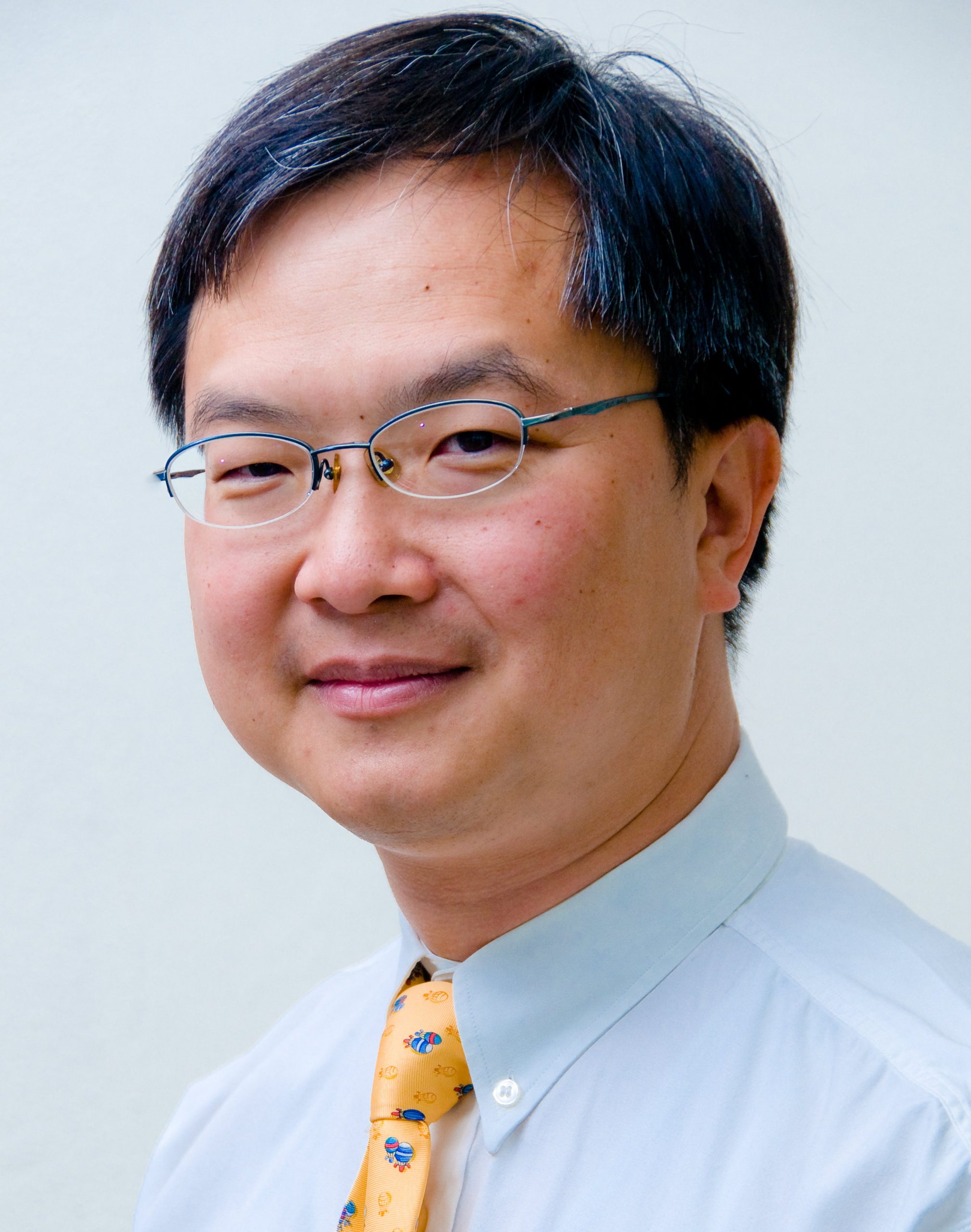
Lim Soon Wong
Faculty & Department
Joint Appointments
Program Director, Integrative Sciences and Engineering, Integrative Sciences and Engineering
Deputy Dean, NUS Graduate School
Deputy Dean, Dean's Office (NUS Graduate School), NUS Graduate School
Jt Appt - Professor, Pathology, Yong Loo Lin School of Medicine
Education
Master of Science (Eng - Comp & Info Sc), University of Pennsylvania, United States
Bachelor of Sci (Engineering) Hons Class 1, University of London, United Kingdom
Bachelor of Sci (Engineering) Hons Class 1, Imperial College London, United Kingdom
Bio
WONG Limsoon is Kwan-Im-Thong-Hood-Cho-Temple Professor in the School of Computing at the National University of Singapore (NUS). He was also a professor (now honorary) of pathology in the Yong Loo Lin School of Medicine at NUS. Before coming to NUS, he was the Deputy Executive Director for Research at A*STAR’s Institute for Infocomm Research. He currently works mostly on knowledge discovery technologies and their application to biomedicine. He has also done, in the earlier part of his career, significant research in database query language theory and finite model theory, as well as significant development work in broad-scale data integration systems.
Limsoon was inducted as a Fellow of the ACM in 2013 and as a Fellow of the Singapore National Academy of Science in 2024, for his contributions to database theory and computational biology. Some of his other awards include the 2003 FEER Asian Innovation Gold Award for his work on treatment optimization of childhood leukemias and the ICDT 2014 Test of Time Award for his work on naturally embedded query languages. He was also recognized by the Singapore government with the 2006 Singapore Youth Award Medal of Commendation for sustained contributions to science and technology, a Public Administration Medal (Bronze) in 2014 for outstanding efficiency, competence, and industry, and a Long Service Medal in 2024 for irreproachable character and his service to the Singapore government and associated organizations.
Contact Information


WONG Limsoon first made his name in the database theory community for a series of fundamental results on the expressive power of nested relational languages augmented with aggregate functions. His theorems on the conservative extension property and the bounded degree property of these languages were breakthroughs that settled some long-standing issues in understanding the expressive power of practical query languages such as SQL. One paper from this series of work was recognized by the ICDT 2014 Test of Time Award. Project webpage
His second well-known contribution to database theory was his role in the solution of the Kanellakis Conjecture on the inexpressibility of transitive closure in a large class of constraint query languages. He made an insightful and fundamental conjecture that this class of query languages under the natural semantics interpretation would collapse to the active semantics interpretation for all queries satisfying a simple genericity condition and proceeded to confirm this conjecture in a collaboration with Michael Benedikt, Leonid Libkin, and Guozhu Dong in a much-celebrated paper. The long-standing Kanellakis Conjecture followed as a direct corollary. Project webpage
Limsoon’s third important contribution was the development of the Kleisli Query System for broad-scale data integration. The system was the first to solve a series of data integration problems considered “impossible” by the US Department of Energy at that time. This seminar work was also considered to be one of the six top practical achievements of the 1990’s in functional programming by that research community as announced in Wadler’s 1998 “Angry Half Dozen” article in SIGPLAN Notices. His work on Kleisli also won him one of the only two Tan Kah Kee Young Inventor Gold Awards (in the open category) ever given in the circa 40 years’ history of the competition series. Project webpage
His next significant contribution was his leadership in establishing natural language processing (NLP) as an important topic in bioinformatics. He initiated the first dedicated bioinformatics conference track on this topic and organized the first three meetings. He wrote one of the first two papers on building an NLP system for extracting protein interaction and regulation information from literature. He also lead-authored the key paper that called the community into action to establish a series of benchmarking competitions on this topic. He co-founded (with See-Kiong Ng) the first commercial company (Molecular Connections Pvt Ltd) that offered services on this topic. The profitable company has grown 400x in two decades. It now has about 2,700 engineers, scientists, and curators and is one of the best SME’s in India. Project webpage
From the early 2000s, Limsoon switched his attention from database theory, data integration, and information extraction to problems in computational biology that require profound domain knowledge in biology and biotechnology. He is among the group of visionary computational biologists to actively pioneer knowledge discovery approaches that deeply incorporate biological background—e.g. biological pathways and networks, often integrated from multiple sources and extracted from free text—to model and solve problems in computational biology. A study reported in CIKM2006 ranked Limsoon as a top-10 social actor who powered data mining research into computational biology. He has three well-known series of works in this area. The first was the extremely widely cited work of Limsoon and his team (Liu Huiqing, Li Jinyan, and Allen Yeoh) with St Jude’s that pioneered knowledge discovery from patient gene expression profiles of childhood acute lymphoblastic leukemias (ALL). It was the first gene expression profile-based work to distinguish all major pediatric ALL subtypes and the first to demonstrate the use of gene expression profiling to identify treatment relapse in certain childhood ALL subtypes. They also presented a novel subtype which is now recognized as the DUX4 subtype—the largest B-lineage ALL subtype among patients with poor initial treatment responses, yet yielding excellent eventual survival outcomes. This work won the team the FEER Asian Innovation Gold Award in 2003. Project webpage
The second was his seminar work (with Hon Nian Chua) on the cleansing and analysis of protein interaction networks. They made a discovery that proteins have much stronger functional association with their indirect neighbours than their immediate neighbours in protein-protein interaction networks. This was totally unexpected by both wet and computational biologists. Limsoon’s team successfully and elegantly exploited this phenomenon to make reliable protein function prediction even in the absence of sequence homology. His team’s key paper on this topic (“Exploiting indirect neighbours and topological weight to predict protein function from protein-protein interactions”, Bioinformatics, 2006) was rated by ISI as the 49th hottest computer science paper published in 2006. Also, his team was winner of the DREAM2 Challenge in 2007 on this topic. Project webpage
The third and most recent is an ongoing series of work (with Wilson Goh and Weijia Kong) on analyzing proteomics datasets which have severe reproducibility and coverage issues. They insightfully pointed out that, for disease phenotypes caused by the non-functioning of a protein complex, a major change in any protein component of the complex would lead to the non-functioning of the complex and, thus, the disease phenotype. Therefore, while one often could not see a consistent proteomic profile at the level of individual proteins (since different ones could change in different samples), one would see a consistent proteomic profile at the level of protein complexes. This insight has led to successful pioneering protein complex-based approaches to overcome, in simple yet refined ways, the consistency and coverage challenges that have plagued untargeted proteomic profiling. Project webpage
WONG Limsoon currently has three main interests:
- Modern programming languages provide comprehension syntax for manipulating collection types. Comprehension syntax makes programs more readable, but comprehensions typically correspond to nested loops. So, it is difficult using it to express efficient algorithms. I.e., a gap exists in the intensional expressive power of comprehension syntax. Limsoon is interested in addressing this gap and am studying synchronized iterators for this purpose. Project webpage
- High-resolution omics measurements and experiments are indispensable in modern biological and clinical studies. Unfortunately, in the course of analyzing omics data, we commonly encounter universality and reproducibility problems due to etiology and human variability, but also batch effects, poor experiment design, inappropriate sample size, and misapplied statistics. Limsoon is interested in advancing our understanding of these issues and addressing them effectively. Project webpage
- It is widely believed that some three quarters of AI systems fail on deployment. While there are multiple explanations for this, the most direct and most fundamental explanation is that these AI systems are often deployed without sufficient testing. Limsoon is interested in improving our understanding of testing in the context of AI & machine learning. He is keen on advocating for more rigorous and comprehensive AI testing frameworks, and improving the teaching of AI in this regard.
My Mentoring Style
How would you describe your mentoring style in terms of freedom given to your students?


Selecting Research Topics?
How do you guide your PhD students in selecting research topics?
Setbacks / Challenges
How do you handle setbacks or challenges faced by your PhD students?
Consultation Frequency
How often do you typically meet your PhD students one-on-one for consultation?