


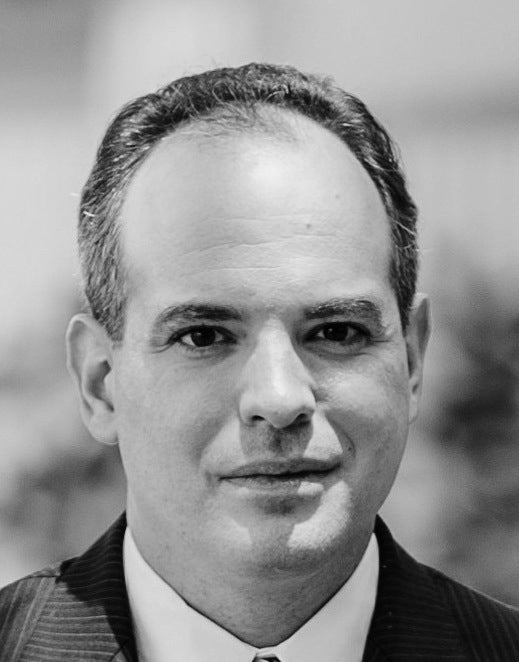
Seth Gilbert
Faculty & Department
Joint Appointments
Head, Department of Computer Science, School of Computing
Education
Doctor of Philosophy, Massachusetts Institute of Technology, United States
Bachelor of Science in Engineering Hons, Yale University, United States
Bio
Seth Gilbert is a Dean’s Chair Associate Professor at the National University of Singapore. His research focuses on distributed algorithms and distributed systems, with a focus on questions of scalability (i.e., how do design very big systems) and robustness (i.e., how do we prevent them from failing).
He received his PhD from MIT, and spent several years as a postdoc at EPFL. His work includes research on backoff protocols, dynamic graph algorithms, wireless networks, robust scheduling, and the occasional blockchain. In fact, Seth’s research focuses on algorithmic issues of robustness and scalability, wherever they may arise.
His work has recently been recognized with several paper awards, including Best Paper at DISC 2023, Best Paper at DISC 2022, Best Student Paper at DISC 2022, Best Paper at ICDCS 2022, Best Paper at IPDPS 2022, and Best Paper at OPODIS 2019. He has also been recognized within NUS, winning the NUS Young Researcher Award. He is an editor of the Journal of the ACM, as well as the Journal of Computer and System Science.
Contact Information

Distributed systems are complex and exciting, and I love to explore the problems involved in designing algorithms that will harness the power of these systems. There are so many interesting problems to think about ranging, ranging from very theoretical questions (such as the optimal communication complexity for some agreement protocol) to very practical questions (such as how to make a blockchain protocol more scalable). And reliable, scalable distributed systems are critical for a variety of applications, whether we are talking about databases, blockchains, distributed ML, federated learning, or more.
So if you want to chat about distributed algorithms—or, in fact, algorithms of any type, do drop by!
Fragile systems: We live in a world increasingly dependent on large-scale, interconnected distributed services. For example, in the financial world, both the traditional banking system and modern Fintech involve massive globe-spanning systems moving large amounts of money at lightning speeds; in the business world, supply chain logistics encompass a complex interacting networks of boats, planes, and trucks connecting factories and warehouses on one continent to consumers on another; and in the information economy, the internet routes massive amounts of mission critical information around the world.
Unfortunately, the systems underlying these critical services are often quite fragile, failing due to bugs, malicious attacks, and other unexpected situations. Moreover, these problems of fragility are getting only worse: as these systems grow ever larger and more complex, the chance of cascading failures leading to catastrophe only grows.
My research: The main goal of my research is to develop algorithmic techniques for designing robust large-scale systems. At the heart of these large-scale systems is the problem of scalable, trusted coordination. How do we build platforms that support coordinated activity among large numbers of untrusted and unreliable participants? How do we cope with this constantly changing environment, where dynamic par- ticipation and continuous cycles of failure and repair are the norm? What are the fundamental algorithms needed to enable these types of large-scale, reliable distributed systems?
My research over the last decade has focused on three critical roadblocks to building robust, scalable, trusted coordination: (i) bandwidth-efficient agreement, (ii) accountability, and (iii) resource allocation—at scale. The first of these is a classic research area in distributed computing, and we have solved several long- standing open questions. The second is a new area (which I have played a role in introducing), and my team has been a leader in introducing new ideas for analyzing accountability. And the third of these is an area where we have introduced several new models and algorithmic techniques (such as distributed smoothed analysis), allowing for a new and deeper understanding of the problems therein.
My Mentoring Style
How would you describe your mentoring style in terms of freedom given to your students?


Selecting Research Topics?
How do you guide your PhD students in selecting research topics?
Setbacks / Challenges
How do you handle setbacks or challenges faced by your PhD students?