


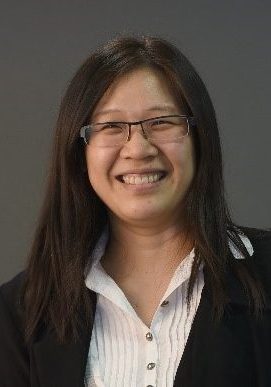
Lih Wen Deng
Faculty & Department
Joint Appointments
Associate Professor, Integrative Sciences and Engineering
Education
Doctor of Philosophy, University of Cambridge, United Kingdom
Bachelor of Science in Agriculture, National Taiwan Univ, Taiwan
Bio
Dr. Lih-Wen Deng is an Associate Professor in the Department of Biochemistry at the National University of Singapore (NUS). She received her Ph.D. from the University of Cambridge and completed her postdoctoral studies at Harvard University. Her research focuses on the molecular mechanisms of cancer development, particularly in therapy resistance and metastasis. Her recent work includes identifying cancer-testis antigens regulating chromatin dynamics in radioresistance and exploring cysteine metabolism in ovarian cancer. She collaborates with clinicians to develop prognostic markers and therapeutic strategies. She is also an affiliated member of NUS Center for Cancer Research and the National Cancer Institute Singapore.
Contact Information


My lab is interested in understanding the cellular and molecular mechanism in cancer development and developing novel targets for therapeutic cancer intervention. Current research areas include: 1) Genomic instability and chromatin dynamics in cancer development; 2) Mechanisms of therapy resistance; 3) Therapeutic potential of targeting cancer metabolism and tumor microenvironment; 4) Cancer oxidative stress and glutathione homeostasis
My Mentoring Style
How would you describe your mentoring style in terms of freedom given to your students?


Selecting Research Topics?
How do you guide your PhD students in selecting research topics?
Setbacks / Challenges
How do you handle setbacks or challenges faced by your PhD students?
Consultation Frequency
How often do you typically meet your PhD students one-on-one for consultation?
Teaching Philosophy: My teaching approach often centers around two main ideas: 1) How can I make the students interested in the topic that I am teaching and 2) How can I distill and transmit the essence of the topic to the student so that students can teach themselves when they read a text or literature. Both these ideas have the same purpose – to help students learn on their own, which in my opinion the true gauge of how successful a module is conducted. An excellent teacher is therefore also a facilitator and motivator and not merely a transmitter of information. Throughout my lectures and presentations, I constantly emphasize this scientific approach to derive the answer and seek the truth. It is important for students to be able to critically evaluate information objectively and have the ability for critical thinking and problem-solving. I always end my lecture with a quotation from Abraham Lincoln,’ I am a slow walker, but I never walk backwards’, to encourage all students to keep on learning. Like other fields of science, biology is adding new knowledge continually. It is never too late to learn new ideas. Taught modules: 1) LSM2106 Fundamental Biochemistry (module coordinator for Sem I for Lecture, Tutorial and Practical)This module provides and lays a rigorous foundation in current concepts in biochemistry. These fundamental concepts form the basis of almost all recent advances in biological and biomedical sciences. Biomolecular structures and functions (including protein, carbohydrates, lipid and nucleotides) and how these biomolecules play roles in biological processes including cellular biocatalyst and metabolism will be introduced and discussed. Practical sessions provide experience in data interpretation and learning of basic laboratory techniques.2) LSM3220 Genes, Genomes and Biomedical Implications (Lecture and tutorial in Sem II): This module deals with the structure, organization and function of genes and genomes in both prokaryotes and eukaryotes (e.g. DNA topology, hierarchy of packaging of DNA in chromosomes and relationship to gene activity and genome dynamics). The functional roles of DNA regulatory cis-elements and transcription factors involved in gene expression will be examined. The molecular events in the control and regulation of transcription; post-transcriptional modifications and RNA processing; temporal and spatial gene expression will be examined in detail. The cause and/or effect of dysfunction of gene expression in diseases and use of modern technologies to examine them will be discussed.Shaded green is added to the existing text description.3) MDG5214 Research Skills (Journal Club)This 4-hr session is a part of a graduate module and the duty is to supervise PhD student in a group of 3 or 4 to conduct effective paper presentations and discussion. I particularly emphasize on the data analysis, results interpretation, paper critiques and active participation to the discussion.