


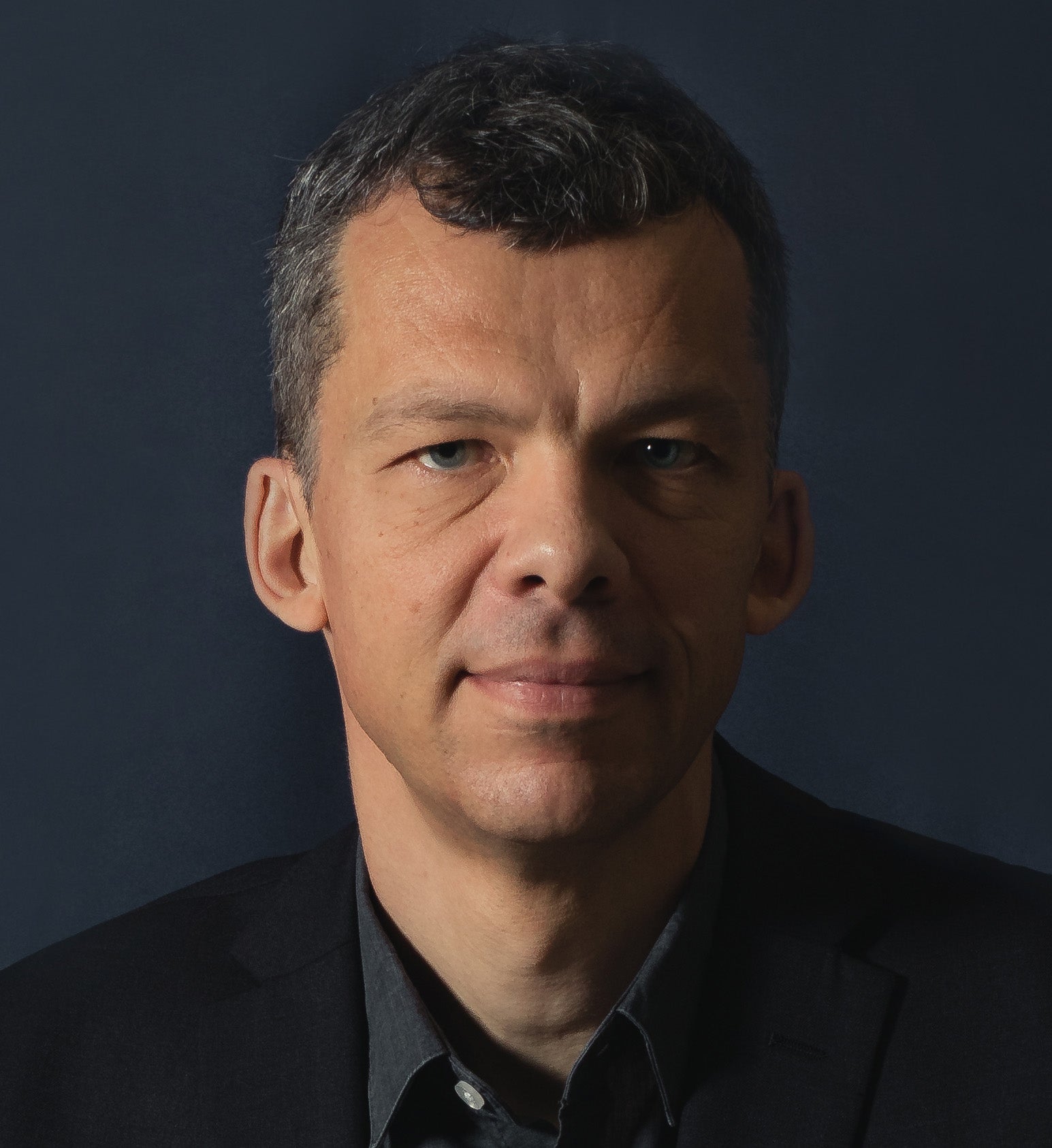
Rudi Stouffs
Faculty & Department
Joint Appointments
Assistant Dean, Dean's Office (College of Design and Eng), College of Design and Engineering
Education
Doctor of Philosophy in Architecture, Carnegie-Mellon Univ, United States
Bio
Rudi Stouffs is Associate Professor and Deputy Head (Research) at the Department of Architecture, School of Design and Environment, National University of Singapore. He holds a PhD in Architecture and an MSc in Computational Design from Carnegie Mellon University, as well as an MSc in Architectural Engineering from the Vrije Universiteit Brussel. He has held previous appointments at the School of Architecture at Carnegie Mellon University, the Chair for Architecture and CAAD at ETH Zurich, and the Chair of Design Informatics at TU Delft.His research interests include computational issues of description, modelling, and representation for design, mainly in the areas of shape recognition and generation, and building/city information modelling and analysis. Current research projects target the application of shape grammars in architectural design, the mapping of BIM models into semantically enriched 3D CityGML building models, and design guidelines for pedestrian walkways influencing comfort and functionality during peak uses.He is an editorial board member for the International Journal of Architectural Computing (Senior Editor), Artificial Intelligence for Engineering Design, Analysis and Manufacturing, and Cogent Social Sciences. He acts as a reviewer for numerous international peer-reviewed journals and conferences, as well as national research foundations.
Contact Information


I appreciate your potential interest in working with me but be aware that I’m unable to accept any new research students in 2026, as I’m focused on graduating many of my current students.
Computational issues of description, modelling, and representation for design, in the areas of shape recognition and design generation, building information modelling and analysis, virtual cities and digital twins
My Mentoring Style
How would you describe your mentoring style in terms of freedom given to your students?


Selecting Research Topics?
How do you guide your PhD students in selecting research topics?
Setbacks / Challenges
How do you handle setbacks or challenges faced by your PhD students?
Consultation Frequency
How often do you typically meet your PhD students one-on-one for consultation?
In my teaching, I encourage and challenge my students to develop and explore their subject in a systematic way through analysis and design, with computational support where applicable and appropriate. In order to motivate them, I seek to invite them, as much as possible, to follow their own interest and define their own subject within or related to the presented theme. Next, I strive to empower them to consider and explore, using computational support, different performance aspects in their design and analysis processes. The objective is not to consider the computational support as driver in the design process but, instead, the performance aspect(s). Performance is considered broadly in this context, it may refer to technical performance as well as qualitative performance, including esthetics. Computational support is thus selected according to the approach taken and the performance aspects considered. Where necessary, I offer them a crash course in the computational means they select to apply and motivate them to further develop their skills through iterative exploration. In general, I seek to empower my students to develop their knowledge and skills through independent study, providing them instead with the necessary head start in order to inspire and motivate them and facilitate their further independent study. I see my role as a tutor as one of inspiring and motivating students, leading them in their (systematic) exploration of their subject through analysis and design, and offering them guidance and feedback with respect to their selection and exploration of their subject, their design performance drivers, and the computational means they apply. In offering computational support, I focus on advanced modeling techniques, such as parametric modeling, and on enabling the designer as tool builder, as coined by Hugh Whitehead of Foster and Partners, reflecting on the fact that often designers become confronted with the limitations of modeling software, whether basic geometric or advanced parametric modeling software, and feel forced to learn to script or program in order to extend the capabilities of the particular software or to generate designs and their materialization. In the teaching of my elective module at NUS, ‘Topics in Design Technology: Fac??ade Rules, Spatial Grammars and Processing,’ I focus on computer programming in the Processing language, considering spatial grammars as a generative design approach applied to fac??ade design. In this way, programming is not the objective per se, but is taught in the context of a design methodology (shape grammars and other spatial rule-based systems) and a design application (fac??ade design). Another example is ‘Stand Up Architecture,’ an elective course I taught at TU Delft that focuses on establishing fluency in digital design techniques, presenting a limited design problem with the goal of introducing students to using parametric design tools and evaluation techniques as well as digital fabrication for a full design iteration loop involving computational generation, analysis and prototyping. Problems are drawn from the different interdisciplinary research areas of architectural engineering and building technology and linked to a short sketch design proposal, which is taken as the starting point of the iterative loop. Physical prototypes are built at the appropriate scale to evaluate the proposal.In teaching design studio to M.Sc. (at TU Delft), M.Arch. and upper year B.A.(Arch.) (at NUS) students, I always notice that while students have already collected a fair amount of design expertise participating in various design studios, most studios tend to emphasize conceptual design and leave little room for experimenting with different materialization approaches. As such, students have little or no opportunity to explore novel or otherwise interesting approaches with respect to performance aspects other than functional, spatial, compositional and esthetic aspects, as emphasized in architectural conceptual design. The evaluation of ideas they do have is often limited to the use of rules of thumb or direct feedback from the instructor. Therefore, I invite my students to consider (a) specific performance aspect(s) as the driver to their design process and offer them computational tools and support to explore their design subject through the creation and/or generation of an appropriate computational design model reflecting on the selected performance driver(s), preferably the production of a physical prototype, and the subsequent evaluation of the design model and/or prototype to feed their further exploration. The feedback and knowledge thus gained can be used to improve the computational model, iterating through the exploration cycle once again. Often, students develop custom tools in support of their exploration. Because of time limitations, students generally complete only one full exploration cycle, improving the model or design using the feedback gained but not being able to evaluate the model completely once again. At the same time, though, they gain valuable expertise with respect to the ability to consider and assess a design idea using computational means, and with respect to the approach, the level of difficulty and the amount of time required to complete the assessment. I consider myself fully successful if they are inspired to apply the knowledge they gained to their M.Arch. or M.Sc. final design project, where they do have the opportunity time wise to explore such design ideas, but without previous experience are reluctant to embark on such explorations.I strongly believe in motivating students to reach their greatest potential. Therefore, I do not use exams to evaluate students performance, instead relying on the design and study products of their learning activities, whether a building design, a computational tool or a study report, in addition to assessing their process, active participation and intermediate results. I consider reflection a quintessential part of the learning process and, when appropriate, require my students to reflect in writing on their own learning process, in the form of, or as part of, a study report due at the end of the course or module. Rather than highlighting the results they achieved, I stress the importance to them of formulating in their report their initial objectives and the methodology they envisioned, and of comparing these to the results achieved and the actual process they followed. I strongly believe in learning by doing and encourage my students to reflect on, and learn from, the obstacles they encountered along the road and how they were able to overcome these or, instead, decided upon sidestepping them.